Musculoskeletal Disorders ROI: Why Investing £1 in Workplace Ergonomics Now Can Save £47 Later
Would you invest £1 to save £47 on musculoskeletal absence costs?
That’s the kind of return suggested by UK modelling on musculoskeletal disorders ROI (MSD ROI) in the Musculoskeletal Conditions: Return on Investment (ROI) Tool published on GOV.UK.
https://www.gov.uk/government/publications/musculoskeletal-conditions-return-on-investment-tool

Once you factor in reduced sickness absence, healthcare use and quality of life improvements, the message for health and safety managers is simple: MSD prevention and ergonomics in the workplace are not costs – they’re high-yield investments.
The cost of doing nothing: HSE musculoskeletal statistics in the UK
Once you factor in reduced sickness absence, healthcare use and quality of life improvements, the message for health and safety managers is simple: MSD prevention and ergonomics in the workplace are not costs – they’re high-yield investments.
The cost of doing nothing: HSE musculoskeletal statistics in the UK
Once you factor in reduced sickness absence, healthcare use and quality of life improvements, the message for health and safety managers is simple: MSD prevention and ergonomics in the workplace are not costs – they’re high-yield investments.
The cost of doing nothing: HSE musculoskeletal statistics in the UK
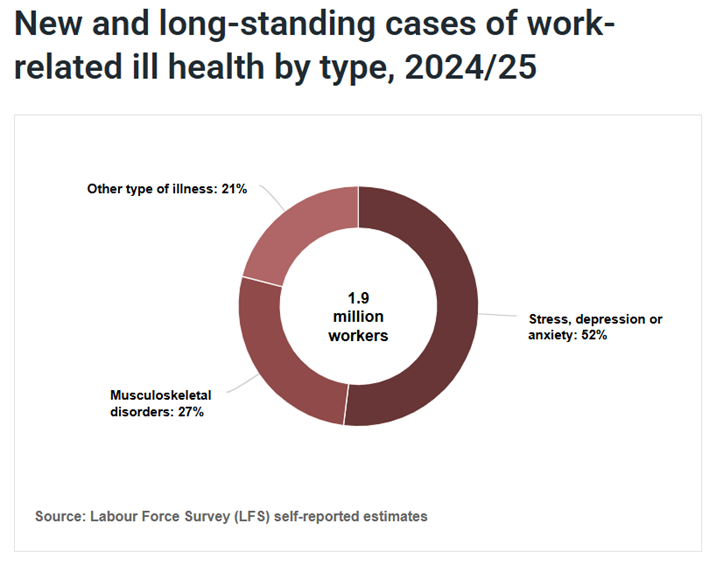
Work-related musculoskeletal disorders in the UK remain one of the biggest causes of work-related ill health. In 2024/25, HSE data show that 27% of all work-related ill health cases were musculoskeletal disorders (MSDs) – more than a quarter of everything we’re dealing with.
We’re still talking about:
- Hundreds of thousands of workers affected each year
- Millions of working days lost due to MSK conditions
- Around two weeks off work per MSD case on average
Behind every statistic is a worker in pain and a team absorbing the disruption. For employers, that translates into overtime, temporary cover, missed output and higher insurance or compensation costs. From a health and safety perspective, MSDs are a human problem; from a business and productivity perspective, they are a major drag on performance.
What the GOV.UK MSK ROI tool shows about MSD return on investment
The Musculoskeletal Conditions: ROI Tool on GOV.UK brings together evidence on several MSK / MSD interventions and essentially asks:
“How many pounds do we get back for every £1 invested?”
Across different models, it finds that:
- Many musculoskeletal interventions more than pay for themselves in direct health and care savings
- When you include productivity and quality of life, the total musculoskeletal disorders ROI can range from several pounds up to around £47 of benefit per £1 invested in some early-intervention scenarios
- Programmes that support early action and self-management (e.g. targeted back-pain pathways, supported activity programmes) consistently show some of the strongest returns, because they stop minor issues becoming chronic
For health & safety managers, this is powerful business case material: MSK prevention is a lever for reducing sickness absence and protecting productivity.
Why ergonomics in the workplace pays off
The ergonomics ROI isn’t magic – it comes from very tangible mechanisms that link workplace ergonomics to business outcomes:
- Fewer injuries and flare-ups → fewer MSD-related absences
- Better-designed workstations and tasks → less fatigue, fewer errors, higher throughput
- Earlier support for symptoms → less need for expensive investigations and long-term treatment
In other words, industrial and manufacturing ergonomics improves both how people feel and how work flows. The same principles that underpin the GOV.UK MSK ROI modelling also underpin good ergonomic design: prevent harm early, design work around people, and you save money as well as pain.
Practical MSD prevention strategies for H&S managers
To turn the evidence from the GOV.UK ROI tool and HSE musculoskeletal statistics into action, health and safety managers can take a structured approach to MSD prevention in the workplace:
• Map your MSD hotspots
Use body maps, HSE tools (MAC, ART, RAPP) and absence data to find the tasks and roles driving MSK issues. This builds a clear picture of high-risk jobs and supports targeted ergonomics interventions.
• Frame proposals in ROI terms
Convert your MSD-related absence into a rough annual cost (lost days, overtime, replacement labour), then set that against the relatively modest spend on ergonomic redesigns, handling aids or early support. Anchor your argument to the national picture from the Musculoskeletal Conditions: Return on Investment Tool and the 27% MSD share of work-related ill health.
• Prioritise design and early intervention
As part of your ergonomics and human factors strategy:
- Fix high-risk jobs with better layout, height adjustment, handling aids or equipment
- Consider Digital Human Modelling at the early stage of design
- Simplify or automate the most harmful manual handling tasks
- Give staff fast access to ergonomics advice or appropriate support when discomfort starts, not six months later
These are the kinds of MSD prevention strategies that turn into real ergonomics ROI over time.
• Monitor and iterate
Track MSD incidents, discomfort reports, risk assessment scores (REBA/RULA/MAC/ART/RAPP) and MSK absence before and after changes so you can show the impact – and refine where needed. This turns ergonomics into a continuous improvement activity rather than a one-off project.
How we can support you with ergonomics and MSD ROI
If you want structured support to put this musculoskeletal disorders ROI evidence into practice, we offer:
- A two-day Ergonomics Champion course for in-house leads, helping your team build the skills to identify risk, make the ergonomics business case and drive change: https://www.morganmaxwell.co.uk/two-day-ergonomics-champion-course/
- Industrial / manufacturing ergonomics workplace assessments & surveys to pinpoint MSD hotspots, prioritise interventions and track improvements over time: https://www.morganmaxwell.co.uk/industrial-manufacturing-ergonomics-workplace-assessment-surveys/
These services are designed to connect HSE MSD guidance, workplace ergonomics assessments, and your own absence data into a clear, evidence-based plan.
Bringing it together
The Musculoskeletal Conditions: ROI Tool on GOV.UK gives you the high-level numbers; your own data tells the local story. Together, they make a clear case that investing in ergonomics and MSD prevention can turn every £1 into many times that in avoided cost and improved performance.
Q: What is the ROI of ergonomics in UK workplaces?
A: Evidence from the Musculoskeletal Conditions: Return on Investment Tool and wider ergonomics research suggests that many MSD and ergonomics interventions more than pay for themselves. When productivity and quality of life are included, total ergonomics ROI can reach several pounds up to around £47 per £1 invested in some early-intervention scenarios.
Q: How much do musculoskeletal disorders cost UK employers?
A: Work-related musculoskeletal disorders in the UK account for hundreds of thousands of cases each year and millions of working days lost. With each MSD case leading to around two weeks off work on average, MSDs represent a major cost in lost productivity, overtime, temporary cover and compensation.
Q: How can health and safety managers build a business case for ergonomics?
A: Use HSE musculoskeletal statistics, your own MSK absence data, and national modelling from the GOV.UK MSK ROI tool to frame ergonomics projects as investments, not costs. Link specific ergonomics interventions to reductions in MSD risk, expected days saved and long-term productivity gains.