Manual Handling Risk Assessment in Manufacturing: A Step-by-Step Guide for Health & Safety Managers
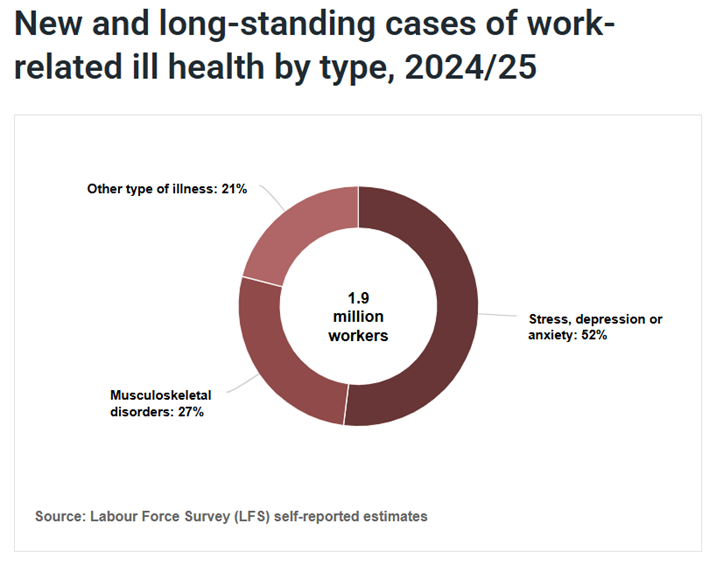
Manual handling injuries remain one of the leading causes of lost time and musculoskeletal disorders (MSDs) in manufacturing. This guide is written for health and safety managers who need a practical, compliant, and scalable approach to conducting a manual handling risk assessment—from quick screens to full, suitable & sufficient assessments.
We’ll cover the core concepts (TILE), walk through a step-by-step method, explain the HSE L23 Level 1 risk filters, explain why MAC is a screening tool (not a full assessment), highlight the Manual Handling Operations Regulations 1992 legal requirements, and provide templates, checklists, and best practices tailored to factory environments.
What is a Manual Handling Risk Assessment?
A manual handling risk assessment is a structured process to identify tasks where people lift, lower, carry, push or pull loads, evaluate the likelihood and severity of harm, and implement controls to reduce risk so far as is reasonably practicable.
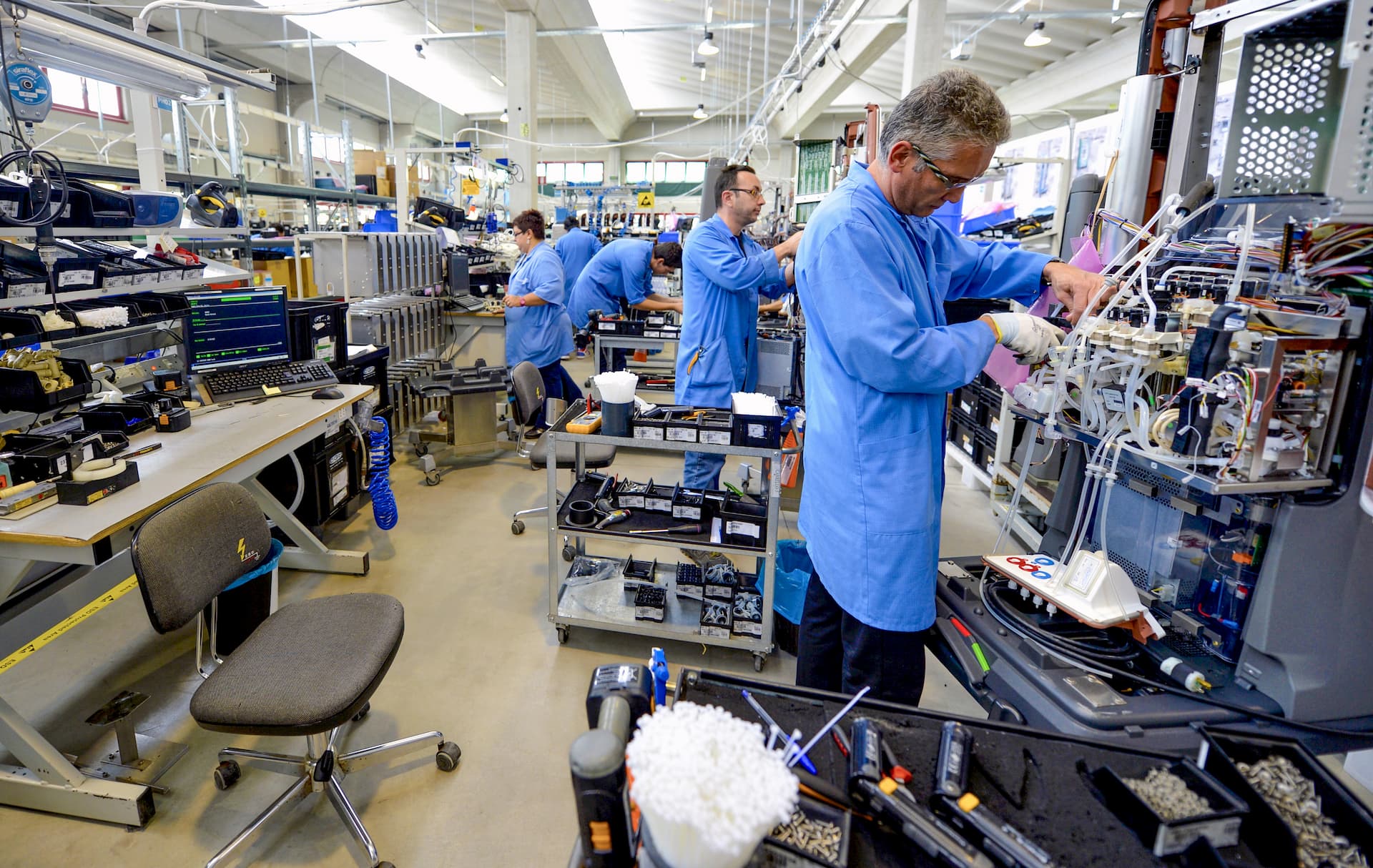
In manufacturing, manual handling covers everything from moving raw materials to palletising finished goods and positioning tooling.
A sound assessment considers TILE:
- Task: movements, frequency, duration, travel distance, twisting/stooping, pace.
- Individual: capability, training, experience, pregnancy, existing conditions.
- Load: weight, size, stability, grip, temperature, sharp edges, fluid movement.
- Environment: space, floor condition, lighting, temperature, vibration, housekeeping.
Note: HSE defines a load as any object, person, or animal moved by hand or bodily force.
Why It Matters in Manufacturing
- Prevalence: Repetitive lifts, awkward postures, and pushing/pulling equipment are routine on factory floors.
- Impact: MSDs drive lost time, quality issues (e.g., errors caused by fatigue), and compensation costs.
- Compliance: Employers must comply with the Manual Handling Operations Regulations 1992 (MHOR 1992), which require avoiding hazardous manual handling where practicable, assessing unavoidable handling, and reducing risk to as low as reasonably practicable (ALARP).
Common Manual Handling Hazards in Factories
- Repetitive lifting/lowering of parts, sacks, reels, or crates.
- Lifting from the floor or above shoulder height.
- Bulky, unstable, hot/cold, or hard-to-grip loads.
- Pushing/pulling heavy trolleys, roll cages, containers, or machinery on poor floors.
- Awkward access: deep bins, confined spaces, reach-in fixtures.
- Environmental stressors: heat/cold, low light, vibration, uneven/slippery surfaces.
Level 1 Risk Filters (HSE L23): Quick Screen Any Detailed Assessment
Use these simple filters first to identify low-risk tasks in ideal conditions and to triage where further assessment is required. They are guidelines—not safe limits—and assume good grip, posture, space, and floors.
Lifting & Lowering Filter
- Compare hand positions during the lift with the guideline zones (floor to shoulder range).
- Apply the corresponding guideline mass for each zone. If hands travel through multiple zones, use the lowest applicable guideline.
- The filter for lifting and lowering assumes:
-the load is easy to grasp with both hands
-the operation takes place in reasonable working conditions
-the handler is in a stable body position. - If the load or conditions fall outside the filter, escalate to MAC/V-MAC and/or a full assessment.

Carrying Filter (short distances)
- Screen carrying tasks (typically up to ~10 m) where posture, grip, and floors are favourable.
- Escalate if surfaces are poor, load is awkward or carry distance/frequency is high.
- The filter weights for lifting and lowering in Figure 1 apply to carrying operations where the load:
-is held against the body
-is carried no further than about 10 m without resting
-does not prevent the person from walking normally
-does not obstruct the view of the person carrying it
-does not require the hands to be held below knuckle height or much above elbow height (owing to static loading on the arm muscles).
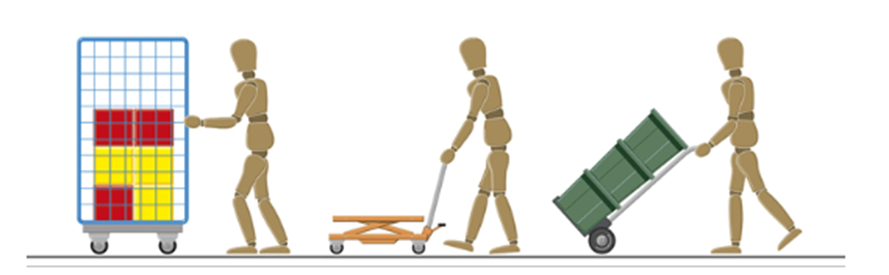
Pushing & Pulling Filter
- Screen start/keep-moving forces for loads moved up to ~20 m under good conditions.
- Escalate to RAPP (and/or a full assessment). if wheels/floors are poor, forces are high, or distances/frequency increase.
- In pushing and pulling operations the load might be slid, rolled or moved on wheels. Observe the general posture being used while the pushing or pulling operation is being carried out. The task is likely to be low risk if:
-the force is applied with the hands
-the torso is largely upright and not twisted
-the hands are between hip and shoulder level
-the distance involved is no more than about 20 m.
An additional indicator that the task is low risk is if the load can be moved and controlled easily with only one hand.
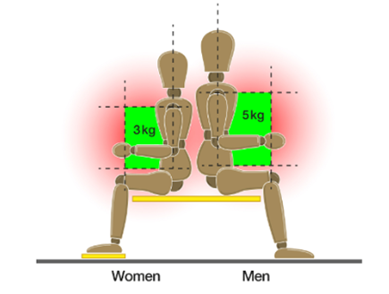
Seated Handling Filter
- Most seated handling tasks do not meet the ‘ideal’ assumptions—escalate unless clearly within the filter and conditions are optimal. and conditions are optimal.
Outcome of Level 1 filters:
- Within guidelines in ideal conditions : record the screen and maintain controls.
- Outside guidelines or non-ideal conditions : proceed to MAC/RAPP screening.
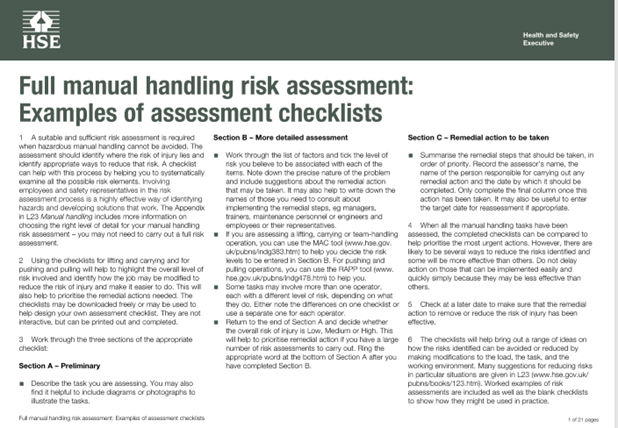
How to Choose the Right Level of Detail for Your Manual Handling Risk Assessments
The Manual Handling Operations Regulations 1992 (and HSE’s L23 guidance), make clear that you must first avoid operations which involve a risk of injury, or where this is not reasonably practicable, assess them and reduce risk to the lowest level reasonably practicable. The level of detail in your assessment should reflect the level of risk:
- Prioritise: focus resources on the highest-risk operations; don’t spend unnecessary time on detailed assessments of obviously low-risk tasks.
- Engage the workforce: involve employees fully—they know the tasks, issues, and workarounds best.
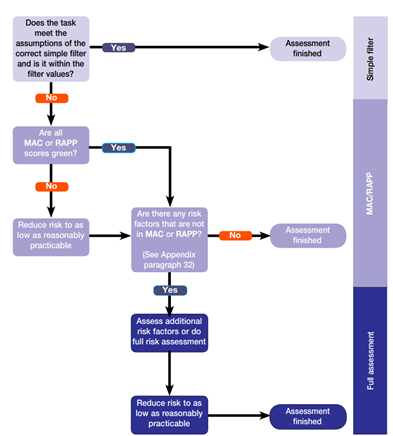
- Three levels of detail:
- Simple filters (Level 1): quick screens to confirm low-risk tasks versus those needing more detail.
- MAC/RAPP (Level 2): HSE’s structured tools to assess common risk factors in lifting/carrying/team handling (MAC) and pushing/pulling (RAPP). These help prioritise control measures.
- Full assessment (Level 3):either by adding detail to a MAC/RAPP assessment to ensure all Regulation 4 factors are addressed, or by carrying out a standalone assessment with HSE’s checklists.
- Flexibility: you may not need to complete all three levels for every task. For high-risk operations, you can go straight to a detailed full assessment. For very low-risk tasks, filters may be sufficient.
HSE illustrates this with a flow chart as seen within figure 5.
Step-by-Step: How to Conduct a Manual Handling Risk Assessment
- Identify Tasks & Hazards
- Walk the line: observe lifting, carrying, pushing/pulling, and awkward reaches.
- Consult operators and supervisors; review incidents and near-misses.
- List each manual handling task with basic descriptors (who, what, where, frequency, duration).
- Apply Level 1 Filters
- Use the L23 filters (lift/lower, carry, push/pull, seated) to triage.
- Document which tasks fall outside the filters or present non-ideal conditions.
- Screen with the Right Tool (MAC / V-MAC / RAPP / ART)
- MAC: lifting, lowering, carrying, team handling (steady loads).
- V-MAC: lifting/carrying where load varies between cycles.
- RAPP: pushing/pulling tasks (on wheels or sliding).
- ART: repetitive upper-limb tasks in assembly/packing (complementary to manual handling).
Important: MAC/V-MAC/RAPP/ART are screening tools. They help identify and prioritise risk but do not, by themselves, constitute a full risk assessment.
- Complete a Full, Suitable & Sufficient Assessment (When Required)
- Escalate to a full assessment when:
•Any element falls outside Level 1 filters.
•Screening flags amber/red risk factors or doesn’t cover your conditions.
•There are significant individual factors (e.g., pregnancy, inexperience, prior MSDs).
• The environment is adverse (space, floors, lighting, temps, vibration).
• There are incidents/near-misses or material/process/layout changes. - A full assessment should:
• Analyse TILE in depth, including task variability, shift length, and recovery.
• Consider exposure (frequency, duration, peaks) and combined hazards.
• Specify controls (engineering, administrative, training, PPE) with ownership and dates.
• Record residual risk and monitoring actions.
- Implement Controls (Hierarchy)
- Eliminate/automate: conveyors, hoists, lift tables, vacuum lifters, automatic feeders.
- Engineer: raise pallets/fixtures, add handles, improve grips, reduce carry distance.
- Administrative: job rotation, pace/recovery, SOPs, pre-lift checks, permit for non-routine lifts.
- Competence: manual handling training (technique + when to refuse unsafe lifts), supervision.
- PPE: gloves for grip/edges, safety footwear—note PPE mitigates consequence, not primary risk.
• Provide and publicise load information: Mark weights/heaviest side or provide general indications where precise labelling isn’t practicable; include this in SOPs and training.
• Early reporting & support: Encourage early reporting of discomfort/symptoms and provide access to occupational health/rehabilitation; early action reduces MSD severity and time off. - Record, Review, Improve
• Keep written records (legally required at ≥5 employees).
• Verify usage/effectiveness (are aids being used, aches still reported?).
• Review at least annually and after changes or incidents.
MAC is Not a Full Risk Assessment – When to Escalate
- What MAC does: Scores key risk factors for lifting/lowering/carrying/team handling to prioritise improvement.
- What MAC doesn’t do: It does not replace a full, suitable & sufficient risk assessment under MHOR 1992. You still must consider individual capability, specific environmental constraints, task variability, combined hazards, and controls beyond the MAC score.
- Push/Pull: Use RAPP for pushing/pulling; MAC isn’t designed for these tasks.
- Variable loads: Use V-MAC when the mass or characteristics change between cycles.
Best practice: If a task is outside Level 1 filters, if MAC/V-MAC/RAPP raise amber/red flags, or if conditions are non-standard, complete and document a full assessment.
Legal Duties (UK – Manual Handling Operations Regulations 1992)
Regulatory Breakdown of MHOR 1992
To ensure compliance, it helps to map your assessments directly to the specific Regulations:
- Regulation 2 – Scope and Definitions: manual handling operations are any transporting or supporting of a load by hand or bodily force (including lifting, putting down, pushing, pulling, carrying, or moving). A load includes an object, person, or animal.
- Regulation 4(1)(a): Avoid: avoid hazardous manual handling operations so far as reasonably practicable.
- Regulation 4(1)(b): Assess: where avoidance is not practicable, make a suitable and sufficient assessment of manual handling operations.
- Regulation 4(1)(b)(iii): Information on the load: provide general indications and, where reasonably practicable, precise information on the weight of each load and the heaviest side if the load is not symmetrical.
- Regulation 5 – Duties of employees: employees must follow systems of work, use equipment properly, co-operate on health and safety, and report hazards or defects.
Key point: Regulation 4 requires that employers make a suitable and sufficient assessment of any hazardous manual handling operation that cannot be avoided. This is the legal backbone for all the methods described above.
For more, see: MHOR 1992 full text and HSE’s guidance on labelling loads.
Applying ALARP When You Choose Controls (Make It Evident & Defensible)
ALARP means reducing risk as low as reasonably practicable by balancing the risk reduction achieved against the time, trouble and money required—without using cost as an excuse where a proportionate, effective control is available. To demonstrate ALARP in manual handling decisions:
- Generate options (avoid → engineer → admin → PPE):
• Avoid/eliminate: automate feeds; deliver to point-of-use; redesign to remove lifts.
• Engineer: lift tables/hoists/vacuum lifters; conveyors; raise pick heights; add handles; improve castors/floors to reduce push/pull forces.
• Administrative: limit weights; team lifts; job rotation; pace/recovery; SOPs; permits for non-routine lifts.
• Competence: task-specific training, supervision, refusal policy for unsafe lifts.
• PPE: gloves/footwear to mitigate consequence (never primary risk control). - Compare options and justify selections:
• Estimate exposure (people, weight, frequency, duration), likely harm severity (e.g., back strain vs. chronic MSD), and residual risk under each option.
• Prefer engineering where reasonably practicable; do not rely on training/PPE alone where a practicable aid exists.
• Apply the ‘gross disproportion’ test: if the safety benefit is significant relative to the cost/effort, implement the control. - Record ALARP reasoning in your assessment:
• Document options considered, controls adopted, and options rejected with reasons (e.g., hoist infeasible in cell A due to headroom—alternative: lift table + raised pallets).
• Include ownership, dates, budget, and how you will verify the control is being used and effective (inspections, discomfort reports, force measurements for push/pull). - Verify and keep it live:
• Check that aids are available, maintained, and actually used; measure starting/rolling forces (RAPP) post-change; monitor symptoms/near misses; iterate.
How to Evidence ALARP (Checklist)
- Link to ALARP Checklist
For credibility and compliance, always reference the Manual Handling Operations Regulations 1992 and the HSE’s guidance on ALARP in your documentation.
HSE Enforcement Examples (Manual Handling)
Real prosecutions highlight what happens when risks aren’t reduced to ALARP.
- MAHLE Powertrain Ltd (2016) – Multiple back injuries linked to manual handling. Breach of Regulation 4(1)(b) MHOR 1992. Fine: ~£183,340 plus costs.
- Dantech Engineering (2017) – Unsafe lifting operation; pleaded guilty to Regulation 4(1)(b) MHOR 1992. Fine: £20,000 plus costs.
Learning points: in each case, the employer failed to avoid hazardous handling where practicable, assess tasks suitably and sufficiently, and reduce risk through proportionate engineering controls—relying instead on poor technique, inadequate planning, or unsuitable systems of work. Demonstrable ALARP (documented options, engineered aids, verified use) is the difference between compliance and enforcement.
FAQs
Is there a legal weight limit for lifting?
No. The MHOR 1992 do not specify a maximum weight. HSE’s guideline weights in L23 are filters, not limits.
Does MAC satisfy my legal duty to assess?
No. MAC is a screening tool. Under Regulation 4, you must conduct a suitable & sufficient assessment when risks are present.
When should I use RAPP?
Use RAPP for pushing/pulling tasks (e.g., roll cages, dollies, pallet trucks).
What about variable loads?
Use V-MAC when the mass or characteristics vary between cycles.
Do I always need training?
Training is essential but not a substitute for engineering controls. Train people in technique and when to stop/refuse unsafe lifts. Consider an ergonomics based manual handling train the trainer course.
Can a ‘load’ include people or animals?
Yes. HSE defines manual handling as moving a load (object, person or animal) by hand or bodily force. People-handling is a specialist area with its own guidance; for manufacturing, focus on inanimate loads but apply the same hierarchy.
Summary
Start with Level 1 risk filters to triage. Use MAC/V-MAC/RAPP/ART to screen and prioritise. Where indicated, complete a full, suitable & sufficient manual handling risk assessment in compliance with the Manual Handling Operations Regulations 1992 (SI 1992/2793). Record load information (weight/heaviest side) where reasonably practicable, promote good handling technique, and enable early reporting/rehab. Reduce risks to ALARP, review regularly.
Further HSE Resources
- Manual handling at work (HSE hub)
- INDG143 – Manual handling at work: A brief guide (PDF)
- MAC tool
- V-MAC tool
- RAPP tool(push/pull)
- MSD hub(toolkit & law)
- MHOR 1992 (legislation)
Need help with your MSD/RSI/Ergonomic Risk Assessment and overall MSD prevention and ergonomics improvement process? Contact Morgan Maxwell today to speak with a Chartered Ergonomist. We can help you identify the right ergonomic risk assessment, checklist, tool, or evaluation for the job. If you’re unsure whether you need a Chartered Ergonomist’s expertise, see our blog post first: What is a Chartered Ergonomist?, and drop us a line with any questions.
.